
Doshas
Ayurveda
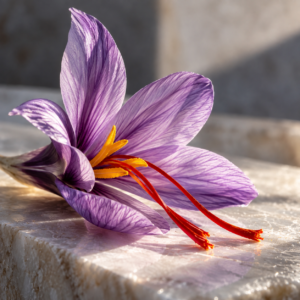
In Sanskrit, Ayur means life and Veda means knowledge. Ayurveda is, literally, the knowledge of life.
Originating in India thousands of years ago, Ayurveda understands the human being as a whole, in constant interaction with their environment. Body, mind and perception do not function in isolation: they are part of the same system.
Its framework is based on five universal elements —Space, Air, Fire, Water and Earth— whose different combinations give rise to three functional principles or Doshas: Vata, Pitta and Kapha.
Each person expresses these principles in a unique proportion. Understanding this individual nature allows us to interpret how we respond to food, climate, stress, the passage of time, and also how our skin behaves.
For millennia, Ayurveda has also studied the properties of plants, minerals and oils, as well as the way in which their qualities combine and transform.
This ancestral knowledge is the foundation of Jeevan Ayurveda.
Doshas
Vata


Elements: Space and Air
The Force of Movement
- The root Va, in Sanskrit, means movement. Space and Air predominate in Vata persons. The qualities of the Vata dosha are: dry, cold, moving, speed, light, rough and irregular.
- The dry quality results in dry skin, dry hair, a hoarse voice, being thin, with a tendency to become constipated and perspiring little.
- The qualities of moving and speed make them very active, with quick action and thought. They are creative, imaginative and with frequently changing interests.
- The cold quality gives them cold hands and feet, with a tendency to get cold easily and a susceptibility for stiffness in the joints.
- The most frequent imbalances in their skin are: dryness, wrinkles and premature ageing.
Pitta

Elements: Fire and Water
The Force of Digestion and Transformation
- Fire and Water predominate in the Pitta dosha. The qualities of Pitta are: hot, quick-witted, penetrating, pungent and slightly oily.
- Those with Pitta predominance are usually of medium size and weight, have soft, sensitive, warm skin and fine hair. They have a tendency for premature greying of hair and hair loss.
- Physiologically, they are strong. They have good digestion, a good appetite, and if they do not eat when hungry, they can get irritable and grouchy.
- They are quick-witted and possess an excellent capacity to understand concepts. They are excellent speakers and leaders. They have a passionate character and strong determination.
- The most frequent imbalances in their skin are: skin rashes, itching, eczema, inflammations and rosacea.
Kapha

Elements: Water and Earth
The Force of Structure and Cohesion
- Water and Earth predominate in Kapha. The qualities of Kapha are oily, dense, firm, slow, steady, heavy and cold.
- Those of Kapha constitution possess solid and robust builds, with powerful and strong musculature. They have a tendency to gain weight.
- The oily quality results in soft and oily skin, with thick hair.
- The slow quality results in a slow digestion. They speak slowly and their movements are slow. Kapha is slow but sure. They do not easily get angry, but when angered, they take a long time to forget. They are faithful and have a calming presence .
Skin Types
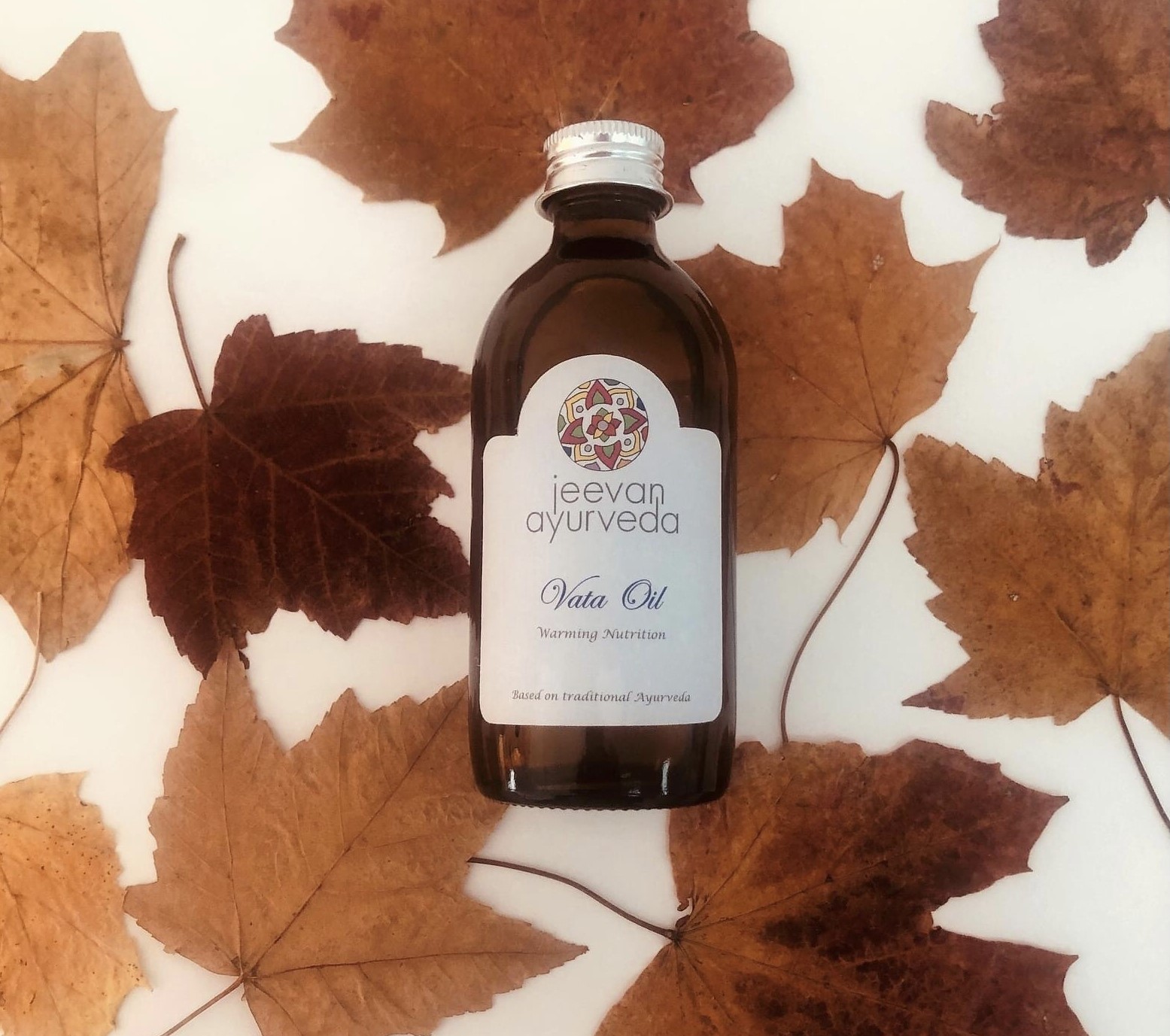
Vata skin types are dry, cold and rough. People with this skin type also often suffer from dry and broken hair.
Air is the dominant element, and as air is similar to a cold wind, the skin tends to suffer from early dehydratation, wrinkles and signs of ageing.
Caring for this skin type requires high level moisturising and warm plants.
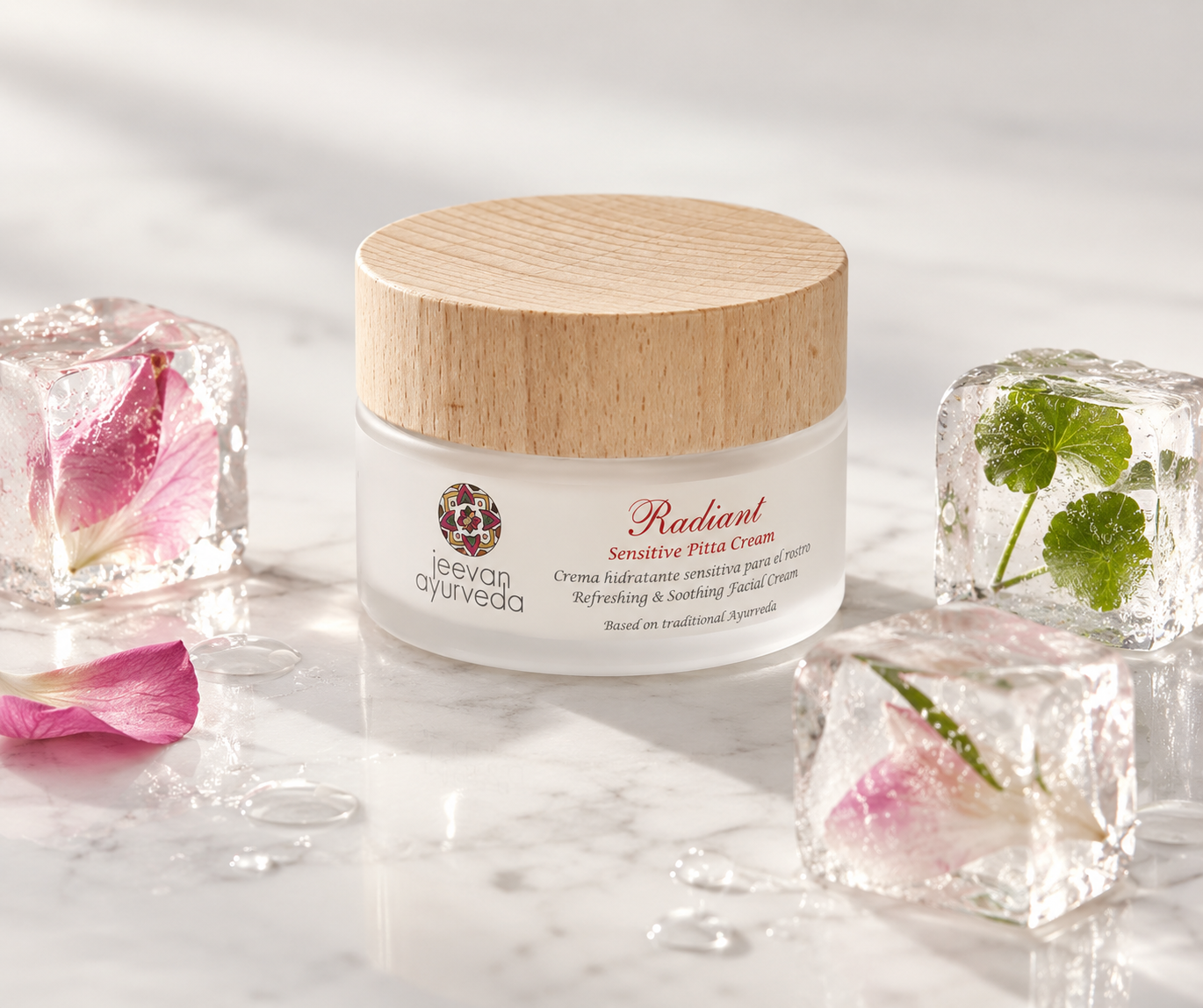
Pitta skin types are warm and sentitive. Fire is the dominant element.
Pitta skin has a tendency to overheat which means that its most frequent outbreaks are rosácea, itching, excema and inflammation.
The most harmonious care of the pitta skin type requires refreshing and calming plants.
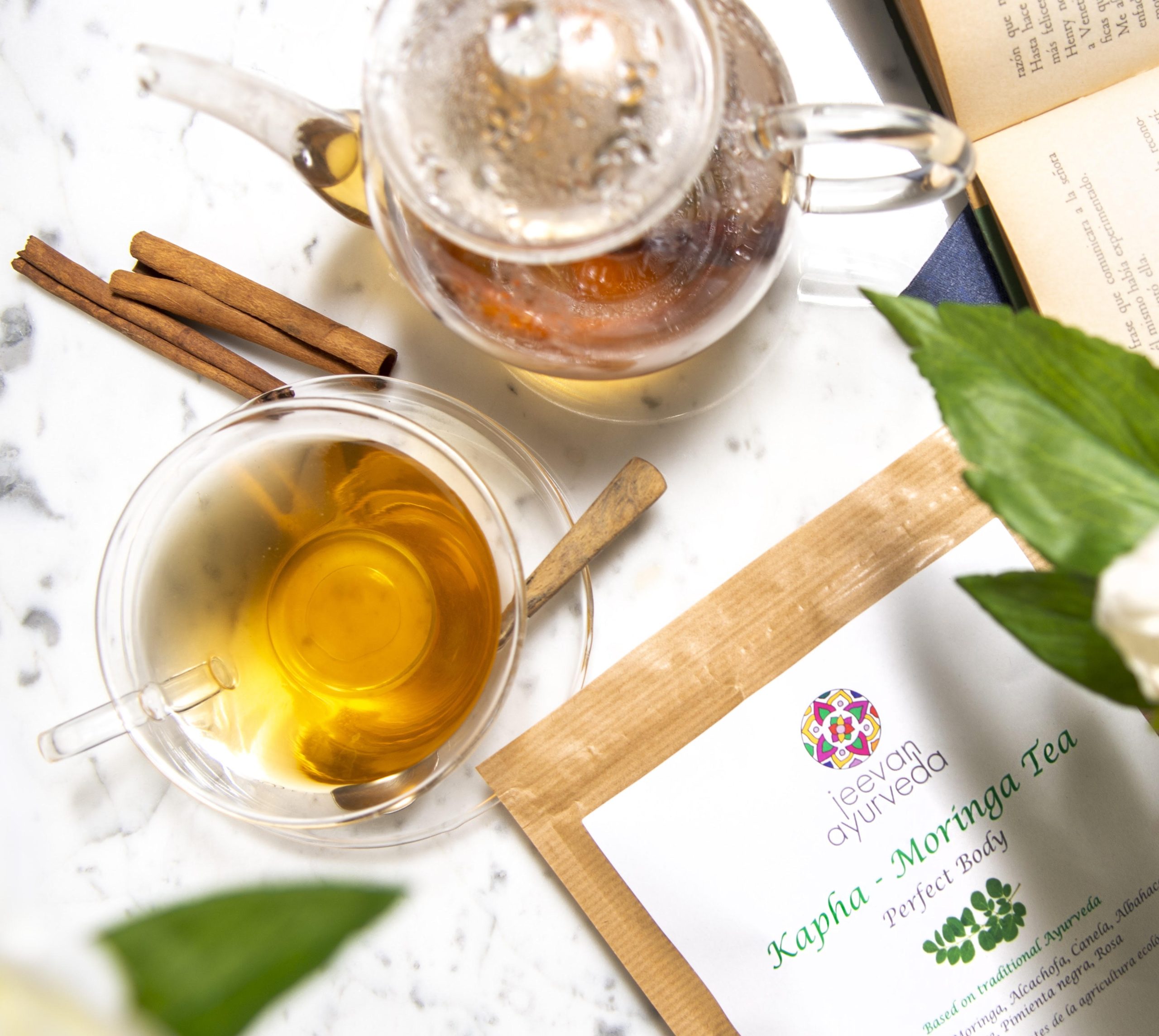
Kapha skin types are smooth and oily.
Earth and wáter are the predominat elements, and its natural oilyness means that it is prone to acné, outbreaks of spots in its youth and sagging in its more mature years.
Appropriate care for this skin type requires stimulant plants.
Find out what your Dosha is
To know your dosha, fill in the following questionnaire, marking the answers that best correspond to your description. Select multiple answers if more than one applies, or leave the question blank if none of the answers apply.
1. ¿How is your body structure?
2. ¿How would you describe your skin?
3. ¿How would you define your skin temperature?
4. In general, how is your weight?
5. How would you describe your hair?
6. ¿How is your perspiration?
7. ¿How would you describe your appetite?
8. ¿How would you describe your bowel movement?
9. How would you define your physical movements?
10. How would you define your way of speaking?
11. ¿How you normally sleep?
12. ¿How would you describe your mental attitude?
13. ¿How would you describe your memory?
14. How would you define your anger?
15. What positive attributes describe you?
Your dosha is:

Vata
Your dosha is:

Pitta
Your dosha is: